You Punched In for a Raise and Never Clocked Out With It
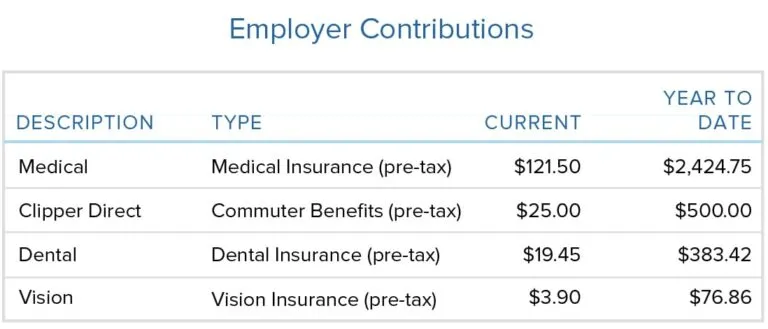
Photo: paycheck stub with retirement plan contribution paperwork on desk, via prod.gusto-assets.com
Here's a thought experiment. Imagine your employer announced that every paycheck would now be 4% short — unless you filled out a single form. You'd fill out the form that afternoon. You'd probably fill it out during the meeting.
That's roughly how a 401(k) match works, and yet millions of American workers leave it unclaimed year after year. We keep calling it "free money," which is a strange label for something you already earned. Nobody calls your salary free money. Nobody calls overtime free money. The match belongs in the same bucket: it's compensation, negotiated into your total package, that only gets paid out if you do your part.
The Part of Your Paycheck You're Forgetting
Think of your total compensation as a pie. There's the slice that hits your checking account every other Friday, and then there's the slice that only exists if you contribute to the retirement plan. That second slice isn't charity, and it isn't generosity. It was priced into your job offer. When HR calculated what you're "worth" to the company, the match was part of the math.
The scale of the forfeit is hard to overstate. Studies from Vanguard, Fidelity, and various academic researchers have consistently found that somewhere around one in four eligible employees doesn't contribute enough to capture the full match. Among younger workers and lower earners, the number climbs higher. Estimates of aggregate unclaimed match dollars run into the tens of billions annually — a number so large it stops feeling real.
What does it look like at the individual level? Take a worker making $60,000 with a dollar-for-dollar match up to 4%. That's $2,400 a year. Skip it for a decade, assuming modest market returns, and you're out roughly $35,000. Skip it for a 30-year career and the gap balloons well past a quarter of a million dollars. That's not a rounding error. That's a house down payment, a fully funded kid's college account, or the difference between retiring at 62 and working until you're 70.
Why Smart People Leave Money Behind
The reasons are rarely about math. They're about friction and psychology.
Cash-flow panic. A 401(k) contribution shows up as a smaller paycheck, and a smaller paycheck feels like a loss today. The match is abstract and far away. Humans are wired to overvalue the present.
Enrollment friction. At companies without automatic enrollment, doing nothing is the default — and doing nothing wins surprisingly often. Even with auto-enrollment, many plans start contribution rates below the full-match threshold and never raise them.
Debt guilt. A lot of workers tell themselves they'll invest "after" they pay off their cards or student loans. The debt lingers, and the match keeps evaporating. Here's the uncomfortable truth: a 100% match is a guaranteed 100% return. No debt payoff strategy beats that, not even the avalanche method, not even a 22% APR credit card.
Plain confusion. Vesting schedules, contribution limits, matching formulas — the paperwork is deliberately dull, and dull things get postponed.
Reframe it this way: every pay period you don't capture the match, you're voluntarily taking a pay cut. Your future self sent an invoice. You keep marking it "return to sender."
The 15-Minute Fix
- Find your plan's match formula. It's in your enrollment packet or a quick email to HR. Common setups: 100% of the first 3%, or 50% of the first 6%.
- Set your contribution to the full-match threshold. If the match maxes at 6%, contribute 6%. Not 3%. Not "whatever feels safe."
- Check the vesting schedule. If you're planning to leave, know what's yours. Many plans vest immediately or within 2–3 years.
- Automate the annual bump. Tie contribution increases to raises so your take-home never shrinks.
- Set a calendar reminder for year-end. Some matches are "true-up" based — if you max out early in the year, you can accidentally forfeit matching dollars in later pay periods.
No Match? No Problem. Build Your Own.
Maybe you freelance, consult, drive for a living, or run a one-person LLC. There's no employer dangling a match, which means there's no one to blame but the person in the mirror. The good news: the self-employed version of this deal is actually more generous. You're both the employer and the employee now, so you get to fund both sides.
Your "claim your own wages" checklist:
- Open a SEP IRA if you want maximum simplicity. You can contribute up to roughly 25% of your net self-employment income, capped around $69,000 for 2024. Setup takes minutes at any major brokerage. Downside: contribution flexibility is limited in a given year.
- Open a solo 401(k) if you want more control. You contribute as both "employee" (up to $23,000 in 2024, plus catch-up contributions if you're 50+) and "employer" (the ~25% piece). If you have a spouse who does work for the business, they can participate too.
- Fund it like a match, not like a wish. Treat a percentage of every client payment as untouchable — 10%, 15%, whatever your cash flow allows. Transfer it the same day the money lands. The match was automatic for W-2 workers; you have to manufacture that automation yourself.
- Mind the deadline. Solo 401(k)s generally need to be established by December 31 of the tax year for employee deferrals. SEP IRAs can be opened up until the tax filing deadline, which makes them the rescue option for procrastinators.
- Talk to a tax pro once. One hour of CPA time can save you thousands and keep you from tripping over compensation calculations.
The Demand
Stop framing retirement contributions as spending. They're a wage collection exercise. For employees, the match is the easiest money you will ever earn — a guaranteed return no hedge fund can promise. For the self-employed, the tax-advantaged accounts are the closest thing you have to an employer benefits package, except the benefits are better.
Your paycheck already agreed to pay you this money. The only open question is whether you'll show up to collect it.