The House Always Wins — Unless You Know When to Call the Bet

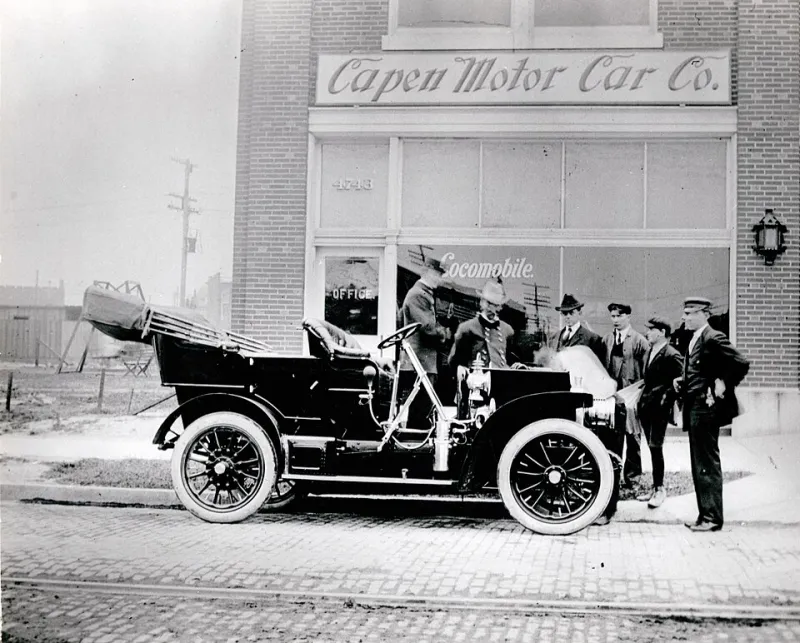
Photo: savagecats, CC BY 2.0, via Wikimedia Commons
Every January 1st, somewhere in a conference room in Hartford or Des Moines, an actuary makes a prediction about you. Not about you personally — about people who look statistically identical to you. Your ZIP code. Your car. Your roof's age. Your credit score. And buried in that prediction is a quiet assumption the entire business model rests on: you won't push back.
Insurance isn't a promise. It's a bet. The house — your carrier — is wagering that the premiums you hand over will exceed the claims you file. And like any casino, the house has an edge. The edge isn't luck. It's math plus inertia. The math is actuarial pricing. The inertia is you, auto-renewing for the ninth straight year because shopping for coverage ranks somewhere between a root canal and jury duty.
Here's the part they don't advertise: the math only works if you stay passive. Break the passivity and the edge shrinks fast.
The Silent Profit Machine
Insurers make money two ways. The first is underwriting income — collecting more in premiums than they pay out in claims. The second is float: investing your premium dollars in the years between when you pay and when (if) you ever claim.
Now look at the numbers through that lens. Roughly speaking, the average homeowner files a property claim once every nine to ten years. Auto claims are similarly rare. That means for the vast majority of policyholders, in the vast majority of years, the transaction is simple: money flows in, nothing flows out.
That's not a scandal — that's the design. Pooled risk only works if most people don't collect. But it explains something important about how carriers treat you: you are not a customer they're serving. You're an investment they're managing. And managed investments get trimmed, repriced, and nudged toward better returns.
Which is exactly what happens at renewal. Your rate creeps up two, five, nine percent — not because you crashed into anything, but because the model says you'll tolerate it. Loyalty pricing, the industry's own term, is the practice of quietly charging long-tenured customers more because they've proven they don't leave. Some states have banned it for auto insurance. Your carrier's renewal algorithm doesn't care about your loyalty. It cares about your inertia.
When Filing a Claim Pays — and When It's a Trap
Here's the question that keeps people up at night after a hailstorm or a fender bender: do I file, or do I eat it?
The honest answer is that the decision is arithmetic, not emotion. Run it like this:
1. Price the claim against your deductible. A $1,400 repair with a $1,500 deductible isn't a claim. It's a Tuesday. You'd be reporting an incident your insurer pays zero on — and that report goes on your record anyway.
2. Estimate the surcharge. For auto insurance, an at-fault claim can raise your premium for three to five years, often 20 to 40 percent cumulatively. On a $1,800 annual premium, that's real money — potentially more than the repair itself. For homeowners, a single property claim can follow you for five to seven years and make carriers reluctant to renew you at all, especially in hail-prone states like Texas, Colorado, and Oklahoma.
3. Apply the rule of thumb. A widely used benchmark: if the claim payout is less than two to three times your deductible after the surcharge math, paying out of pocket usually wins. A $2,500 loss on a $1,000 deductible? Marginal. A $15,000 roof? File. That's what the product is for.
4. Check your claim history before they do. Most carriers feed the CLUE database — a comprehensive loss record that follows you between insurers. Filing a small claim doesn't just cost you this year; it raises your price at every future carrier that pulls the report.
The trap isn't filing claims. It's filing small ones — the $900 windshield, the $1,100 fence — that convert you, on paper, from a profitable policyholder into a problem account. The house doesn't mind paying big claims occasionally. It minds customers who nick the edge constantly.
Read Your Own Books for Once
You can actually measure how much value you extract from your carrier. It's called your personal loss ratio: total claims paid to you, divided by total premiums paid, over the years you've held the policy.
Pull your declarations pages and add it up. Most long-tenured customers land somewhere between 0.2 and 0.5 — meaning the carrier keeps 50 to 80 cents of every dollar you've paid. Compare that to the industry's own target: many carriers aim to pay out 60 to 70 cents per premium dollar across their book.
If you're way below the industry average, you're subsidizing someone else's claims. That's not a reason to file a fake one — that's fraud, and it's a felony. It is a reason to stop overpaying. Your loss ratio is the single most persuasive fact you own when you go shopping. A carrier bidding for your business knows a decade of clean history makes you cheap to insure, even if your current carrier prices you like a hazard.
Three Leverage Points That Change the Conversation
Passive customers get renewal letters. Active customers get concessions. Here's the toolkit:
The shopping threat — executed, not implied. Get real quotes from at least three carriers (an independent agent can pull a dozen at once). Then call your carrier's retention line, not the general service line, and say the magic words: "I have a binding offer for less. Match it or I'm switching today." Retention departments have pricing authority the front-line reps don't. This works best right before renewal — that's when your rate is on the table and the carrier's model is deciding whether to keep you.
The public adjuster. When you have a large property claim and the carrier's offer feels low — and it often does — a public adjuster works for you, typically for 5 to 15 percent of the final settlement. Studies have repeatedly shown claims handled by public adjusters settle substantially higher than those handled alone. On a $30,000 claim, the math is rarely close. You wouldn't negotiate a six-figure dispute without representation; a major claim is exactly that.
The state insurance department. Every state has one, and they exist precisely because carriers hold all the cards otherwise. A formal complaint — filed online, usually in fifteen minutes — triggers a documented review the insurer must respond to in writing. Carriers track complaint ratios. A pattern of complaints in one state shows up in their rate filings and their regulator relationships. One complaint won't topple an empire, but it routinely unsticks a stalled claim, because the person handling it now has a supervisor asking questions.
Stop Being the Easy Money
None of this requires you to become a professional negotiator. It requires you to stop behaving like the policyholder the model predicts: the one who renews blindly, files $900 claims, and never once asks what the house's edge is this year.
Check your loss ratio this weekend. Get three quotes before your next renewal. Save claim-filing for losses that actually justify it. And when a big claim goes sideways, remember that the state gave you a regulator and the market gave you public adjusters — both of them exist because enough people got tired of being the easy money.
The house always wins against players who don't know they're in a game. You're in one. Act like it.