Milk in the Back, Money Out the Door: The Supermarket Map That's Costing You $150 a Month
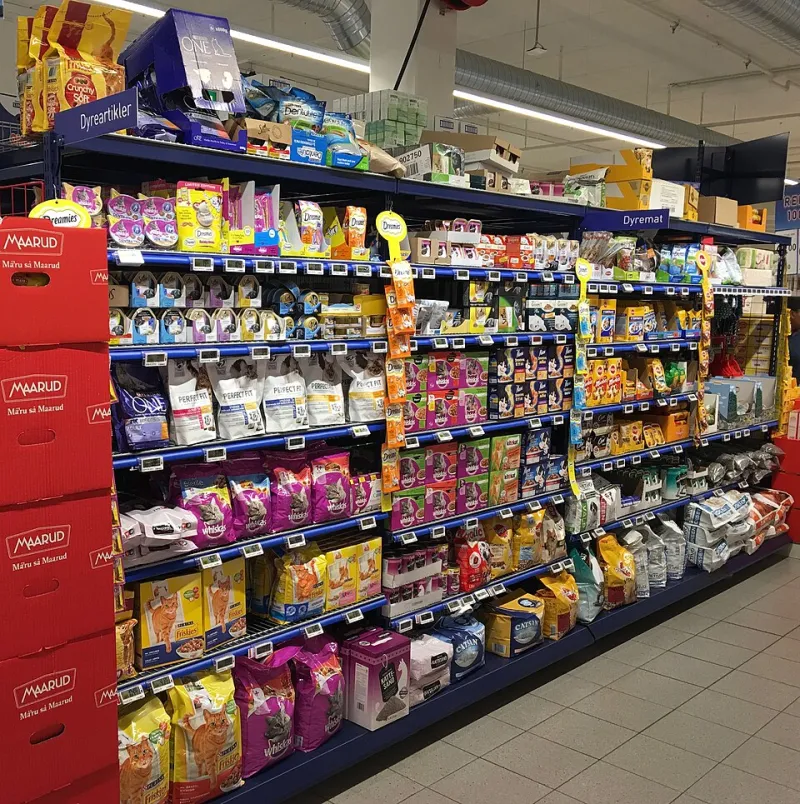
Photo: Wolfmann, CC BY-SA 4.0, via Wikimedia Commons
You didn't wander into Kroger planning to spend $184 on a $95 list. Nobody does. And yet here we are, unloading a cart that somehow contains two kinds of specialty crackers and a candle you never wrote down.
The store didn't get lucky. The store got paid. Grocery retail is one of the thinnest-margin businesses in America, which is why the people running it treat your attention like a commodity and your route through the building like a funnel. Once you see the design, you can't unsee it — and once you can't unsee it, you can start beating it.
The Floor Plan Is a Maze With One Exit
Start with the milk. It's almost never near the door. Dairy lives at the back of the store — sometimes in a far corner — because milk is the single most common item on American shopping lists. The industry term for this is a "destination item": something everyone needs, placed as far as possible from the entrance so you walk past everything else to get it.
Same logic, different packaging: eggs, bread, and the pharmacy counter. All destinations. All deep in the building.
Meanwhile, the stuff with the fattest markups sits at eye level. Shelf-stacking consultants have a name for the money shelf — roughly chest-to-eye height — because that's where your gaze lands first and where brands pay slotting fees to live. The cheaper per-ounce option is usually crouching near your shoes.
Then there's the produce section up front, which sounds wholesome until you realize it exists to put you in a spending mood. Bright colors, fresh smells — retail psychologists call this the "dewey decimal" effect, priming you to feel virtuous before the snack aisles get their turn.
BOGO Isn't a Discount, It's a Volume Dial
Let's talk about the buy-one-get-one tag, because the math is sneakier than it looks.
A true 50% off sale on an item you'd buy anyway? Fine. But BOGO often requires you to buy two units to unlock the deal, doubling your out-of-pocket spend on something with a shelf life. Buy one get one on salad greens is a donation to your garbage disposal. On meat, it only works if your freezer is ready.
Worse are the fake BOGOs: the price of each unit quietly inflated so the "deal" matches the regular price elsewhere. This is why the unit price on the shelf tag — that tiny number showing cost per ounce or per sheet — is the only honest language in the building. The big price is marketing. The unit price is math.
A quick rule: compare the unit price, ignore the sticker's tone of voice. "2 for $5" means nothing. "$0.42 per ounce" means everything.
The Checkout Lane Is the Last Slot Machine
By the time you reach the register, your willpower is spent and the store knows it. That's why the lane is lined with candy, cold drinks, tabloids, and impulse gadgets — items with margins the store can retire on. Industry estimates put checkout purchases at $5 to $10 per trip for a meaningful chunk of shoppers. Do that twice a week and you've lit $700 to $1,400 a year on fire, one Kit Kat at a time.
Self-checkout helps, but only if you treat the queue like a waiting room, not a gift shop.
Four Counter-Moves That Actually Work
1. The 10-Minute Perimeter Rule. Most of what a solid grocery list requires — produce, dairy, meat, eggs — hugs the outer walls of the store. Walk the perimeter first, shop your list, and only enter the interior aisles for specific items you wrote down. Shoppers who restructure their route this way routinely report trimming $30 to $50 off a weekly haul, mostly by dodging the processed-food aisles where impulse lives.
2. Shop by unit price, not by brand loyalty. One reader we heard from, a nurse in Ohio, started photographing unit prices on her phone and comparing across her two nearby chains. Her monthly grocery spend dropped from about $720 to $560 — same meals, different shelves.
3. Run the meal-kit math before dismissing it. A meal kit at $9 to $12 per serving looks expensive next to a $6 fast-food run. But compare it to a full grocery trip where you buy a whole bunch of cilantro for one recipe and toss half of it, and the gap narrows fast. If your current routine wastes 20 to 30% of what you buy — and USDA data suggests the average household does — a two-nights-a-week meal kit subscription can be a wash or better, with zero food waste attached.
4. Make the list a contract. The list isn't a suggestion; it's a spending cap. Everything not on it has to clear a 24-hour test: do you still want it tomorrow? Most impulse purchases don't survive the drive home, let alone a day.
Why This Belongs in Your Debt Conversation
If you're carrying credit card balances, groceries are one of the few budget lines you can actually renegotiate this month. You can't call your landlord and ask for a do-over. You can absolutely restructure how you walk through a supermarket.
And that's the point. Debt management isn't only about interest rates and balance transfers — it's about stopping the slow, daily leaks that keep the balance from ever shrinking. A $150 monthly grocery leak is $1,800 a year that never reaches your credit card payment. The store built the maze. You don't have to walk it the way they drew it.