The Box Got Smaller. The Price Didn't. Let's Talk About It.
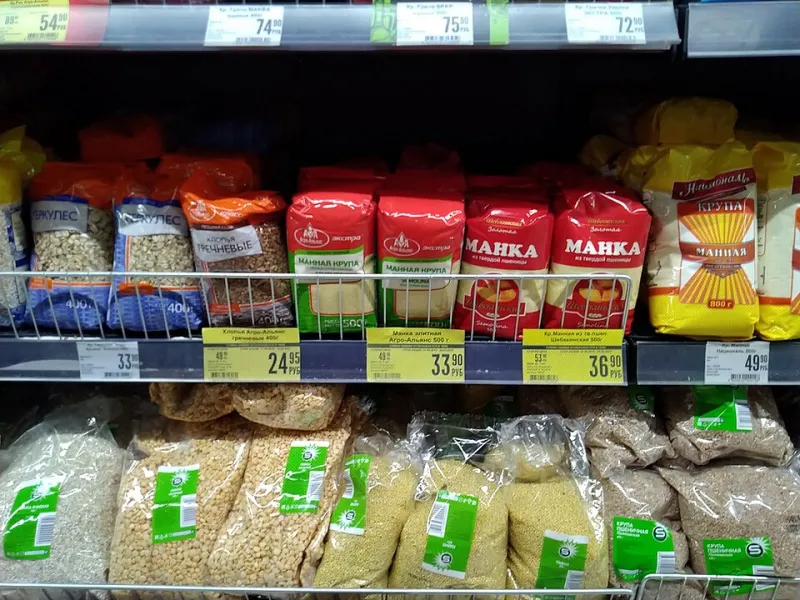
Photo: Alexander Davronov, CC BY-SA 4.0, via Wikimedia Commons
Your grocery cart doesn't just feed your family anymore. It's a portfolio of tiny decisions, and lately, every one of those decisions has been quietly restructured against you. The cereal box slimmed down. The chip bag filled up with more air. The "family size" pasta jar now feeds a family of two, generously.
Nobody sent you a memo about this. That's the whole business model.
The Deal Changed. Did You Notice?
Shrinkflation sounds like a made-up internet word, but it's a real and thoroughly legal pricing strategy. Instead of raising the sticker price — which shoppers notice and resent — a manufacturer trims the package. Twelve ounces becomes eleven. Sixteen slices becomes fourteen. The price stays put, and your cost per ounce quietly climbs 8, 10, sometimes 15% overnight.
Why do brands do this instead of just charging more? Because you're wired to remember prices, not weights. You know a bag of shredded cheese "should" be $3.49. You have no idea how many grams it used to contain. The sticker is the anchor; the contents are negotiable.
The result: the deal you think you're getting and the deal you're actually getting have drifted apart. Your job is to close that gap.
Unit Price: The Only Number That Tells the Truth
Walk down any aisle in a Kroger, Safeway, or Walmart and look closely at the shelf tag. Below the big price, there's a smaller number — the unit price. Cost per ounce, per pound, per sheet. That number is the great equalizer, and most shoppers walk right past it like it's the terms and conditions.
Here's your new habit: ignore the price. Read the unit price first. Compare it across brands, across package sizes, and across weeks. When the big brand "holds the line" at $4.99 while trimming two ounces, the unit price snitches on them instantly. It'll show you that the store brand — often made in the same handful of plants — is 20 to 40% cheaper per ounce.
A few unit-price traps to watch for:
- Mixed units. Some items get priced per ounce, some per pound, some per sheet or per count. Convert before you compare.
- Bigger isn't always cheaper. The bulk size occasionally carries a higher unit price than the regular one. Retailers count on warehouse-club reflexes.
- Sale tags lie by omission. A "rollback" on a freshly shrunk package can still leave you paying more per ounce than the old regular price.
Snap a photo of the shelf tag when you find a genuinely good unit price. Prices move, and your own data beats any app's guess.
Where the Shrinking Hits Hardest
Shrinkflation isn't spread evenly across the store. It concentrates where shoppers buy on autopilot and rarely weigh anything:
- Snacks and chips. Bags keep their dimensions while the contents thin out. More nitrogen, fewer chips, identical silhouette.
- Coffee. One-pound bags have been quietly morphing toward 10 or 11 ounces for years.
- Paper goods. Toilet paper and paper towels shrink by sheet count and sheet width — a double-dip most people never clock.
- Canned goods and jarred sauces. 15-ounce cans drift to 14.5, then 13.8, while recipes get waterier.
- Frozen foods. Ice glaze counts as weight. Read the net weight, not the box.
Fresh produce, meat counters, and bulk bins are far harder to shrinkflate — nobody can downsize a banana. Shifting even part of your basket toward the perimeter of the store naturally sidesteps the worst of it.
Flip the Deal Back: Five Moves That Don't Require a Binder Full of Coupons
You don't need to become an extreme couponer with a spreadsheet and a garage full of mustard. You need to change the terms of the transaction, the same way the brands did. Here's the playbook:
1. Let the unit price pick the brand. Brand loyalty is a subsidy you're paying to a company that just shorted your orange juice. If the store brand beats the name brand per ounce — and it usually does — switch without ceremony. Taste-test once. Keep what wins.
2. Shop the price history, not the price. Apps and store loyalty programs show regular prices versus sale prices. If the "sale" unit price is just the old regular unit price, you've spotted the trick — and you know to wait or substitute.
3. Buy the ingredient, not the convenience. Pre-shredded cheese, single-serve snacks, and ready-made anything carry a convenience tax on top of shrinkflation. A block of cheese and ten seconds with a grater is a raise you give yourself.
4. Batch your staples. When the unit price genuinely favors the big size — and it doesn't always — stock up on shelf-stable staples you'll actually use. Rice, oats, canned tomatoes, coffee. The pantry is your hedge against the next downsizing round.
5. Complain, out loud. Brands track this stuff. When enough shoppers notice a shrunk package, some companies quietly restore the size and advertise it as a "value improvement." Your voice on social media and in customer surveys is a real input, not a scream into the void.
The Receipt Is the Scoreboard
Here's the mindset shift: stop measuring your groceries by what the receipt says and start measuring by what you got. A $100 cart that weighs less than last year's $100 cart isn't stable pricing — it's a stealth price hike wearing a friendly shelf tag.
Track your unit prices for a month. Not everything, just your ten most-bought items. That's fifteen minutes of effort that functions like a pay raise, because it is one: money that stays in your pocket instead of evaporating into extra headspace in a chip bag.
The brands rewrote the deal in fine print you couldn't see. The unit price is where you get to read it — and where you get to write your counteroffer.